
Much of lived experience unfolds quietly, outside of what our concepts, models and methods are able, and sometimes even willing, to see.
We all know what lived experience is. So why do I add the word “real”? And why does real lived experience, the R in RLX, matter for how we perceive experience, and for how we design, create and value what we do?
To answer that, it helps to look first at the three common ways that experience is typically understood.
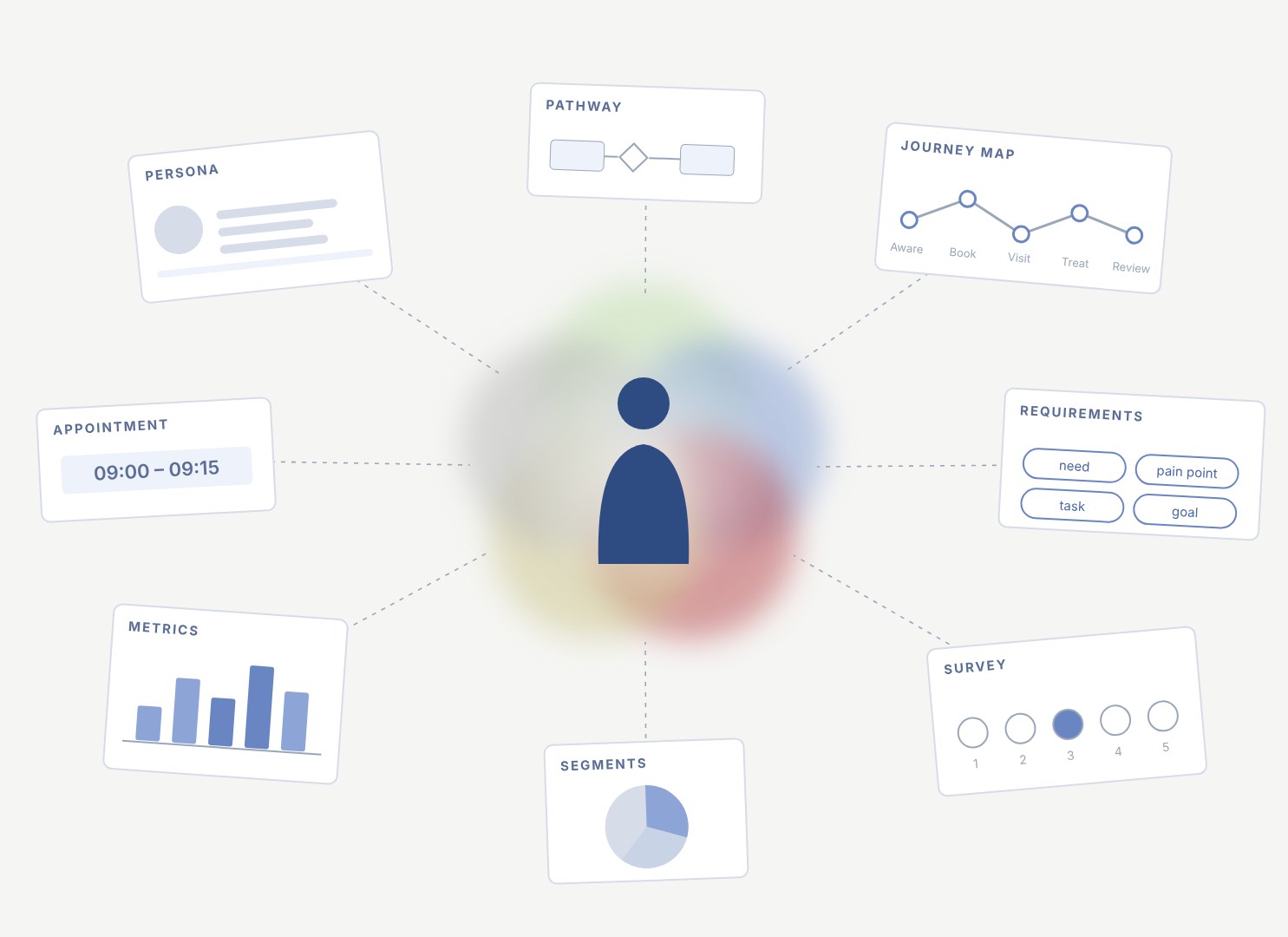
First, experience is abstracted. Lived experience is treated as something that can be represented, captured, measured, categorised or stood in for. It is translated into concepts, stories-after-the-event, personas, journeys and metrics. Experience becomes something that can be summarised, compared and communicated through secondary formats and means.
Second, experience is time- or activity-bounded. Experience is commonly broken into discrete goals, events, tasks and actions that can be analysed and sometimes designed in advance. It is framed as having a clear beginning and end: this experience started here, ended there, and consisted of one or more identifiable emotions or qualities. Time here is treated as something that can be segmented and contained in clock time.
Third, experience is individualised. Experience is understood primarily at the level of the individual. It is perceived as a (often single) quality of a person’s mental or bodily state as they interact with something, someone or somewhere. Experience appears as something that belongs to a subject, and is located within a single human perspective.
Taken together, these three ways of understanding experience dominate how experience is researched, designed, managed and evaluated across any context: health, care, service, enterprise and more.
The problem is that these three modalities do not reflect the concrete nature of experience itself, its lived reality. They can make experience legible, actionable and manageable, yet representational, segmented and individualised logics diverge from how life is, and especially from how it variously becomes and is, well, experienced.
There is something even bigger at stake here. Many people’s lived experiences are often not seen at all. When lived experience falls outside what can be captured, categorised, measured, expressed easily or neatly described, it can disappear from view altogether. And when experience involves suffering, neglect, exclusion or ongoing frustration with systems, technologies or institutional responses, our dominant ways of working with experience are inadequate, and can be harmful. They enact a kind of epistemic violence on those who cannot speak up, who cannot express what is happening, and whose lives pass by our efforts to capture their experience.
In such cases, the concepts, logics and methods used to “understand” experience participate in that person’s erasure. The very ways we think about experience are themselves part of the problem. They reinforce invisibility, misrecognition and ongoing harm.
Why “real”?
Adding the word “real” signals a commitment to begin from lived experience as it is lived.
By real, I do not mean experience that is authentic, raw or unmediated. I mean experience as it continues, changes in qualities, intensifies, and sometimes breaks.
Real lived experience, or RLX, is not something that people step into for a moment, for an event or for a functional activity, and then leave behind. Rather, it is the ground from which action, meaning, reality and sometimes (not always) possibility emerge.
This matters because when experience is abstracted, our designs, ideas, plans and work may look coherent and well intentioned, and still fail to do as intended. Services, systems and strategies make sense on paper yet miss their objective or fail in reality. Worse, they may even obscure, worsen or strain the lives they are meant to change, help or improve.
A further post will introduce six dimensions that define the “real” in Real Lived Experience. Each has important implications for how we perceive, think, create and value our work when it begins from lived reality rather than its abstraction.
Agree or disagree? How does abstraction help in your work, and what is lost? Join the conversation in the bergson.ai Community.