
Integration joins organisations. It does not by itself show where value forms and fails across a care ecosystem, or which changes will hold. Many of the hardest problems in care sit between services, between levels of practice and in neighbouring systems such as housing, transport and work.
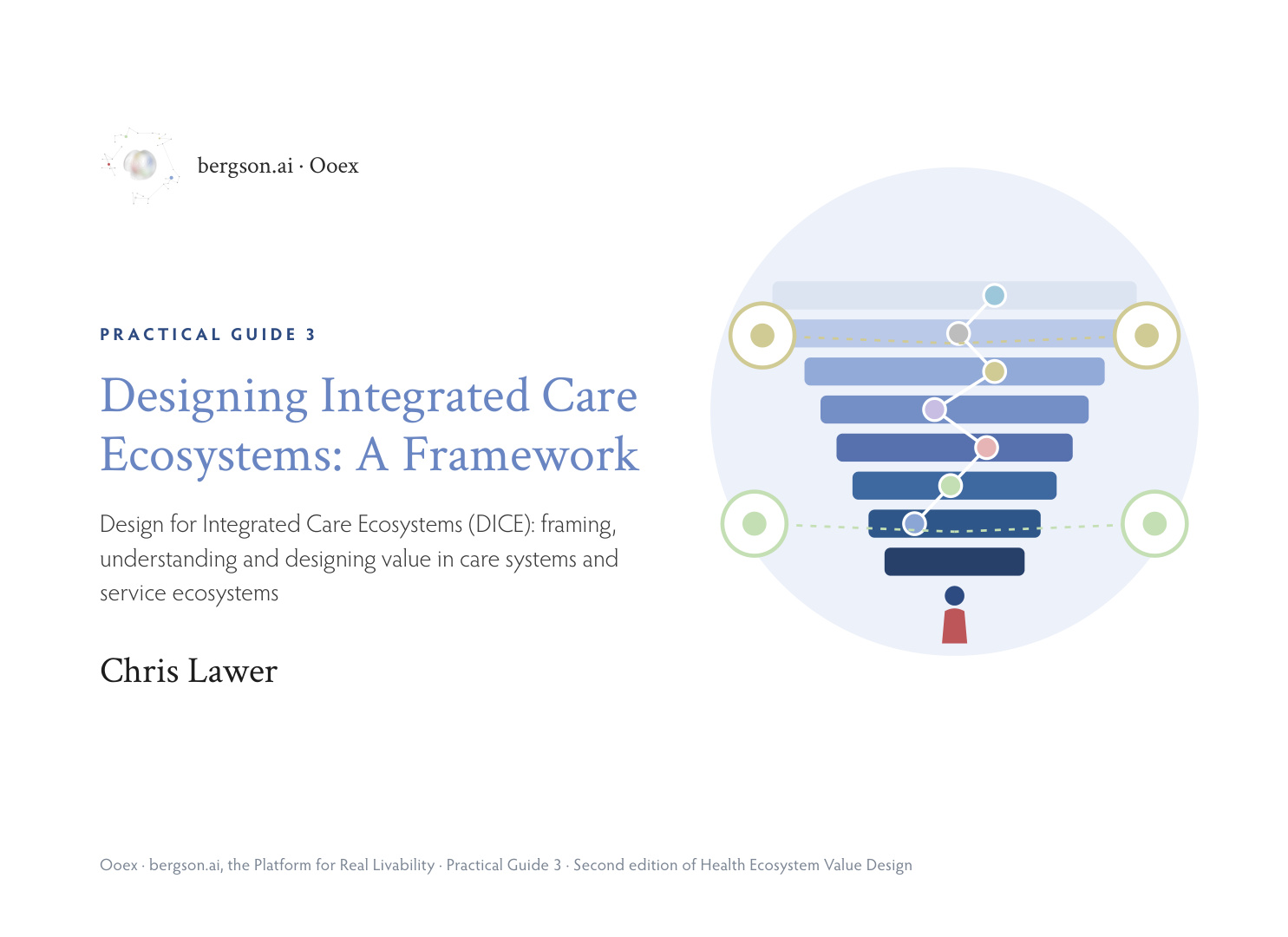
Practical Guide 3 sets out Design for Integrated Care Ecosystems (DICE), the second edition of my 2017 framework Health Ecosystem Value Design, rewritten for care systems and service ecosystems. It frames a care ecosystem around the people it serves, reads how it functions across eight levels of co-creation practice, and designs value through seven classes, from exchange to Real Livability, with Design for Real Livability adding the seventh. It includes eight practical steps, a rating scale, six design principles, five strategy maps, a worked case and templates.
DICE is the service ecosystem part of Design for Real Livability. Design for Real Livability works on the wider experience ecosystem around a focal context of experience; DICE works on the care system within it, centred on the patient or other beneficiary.
Resources are free to read when you sign in.